
BUYER'S GUIDE 11 min read
How to Source Wholesale Plastic Storage Bins: A Buyer’s Checklist for Retail and Private Label
Learn how to source wholesale plastic storage bins for retail or private label. Compare use cases, dimensions, materials, packaging, samples and inspection requirements.
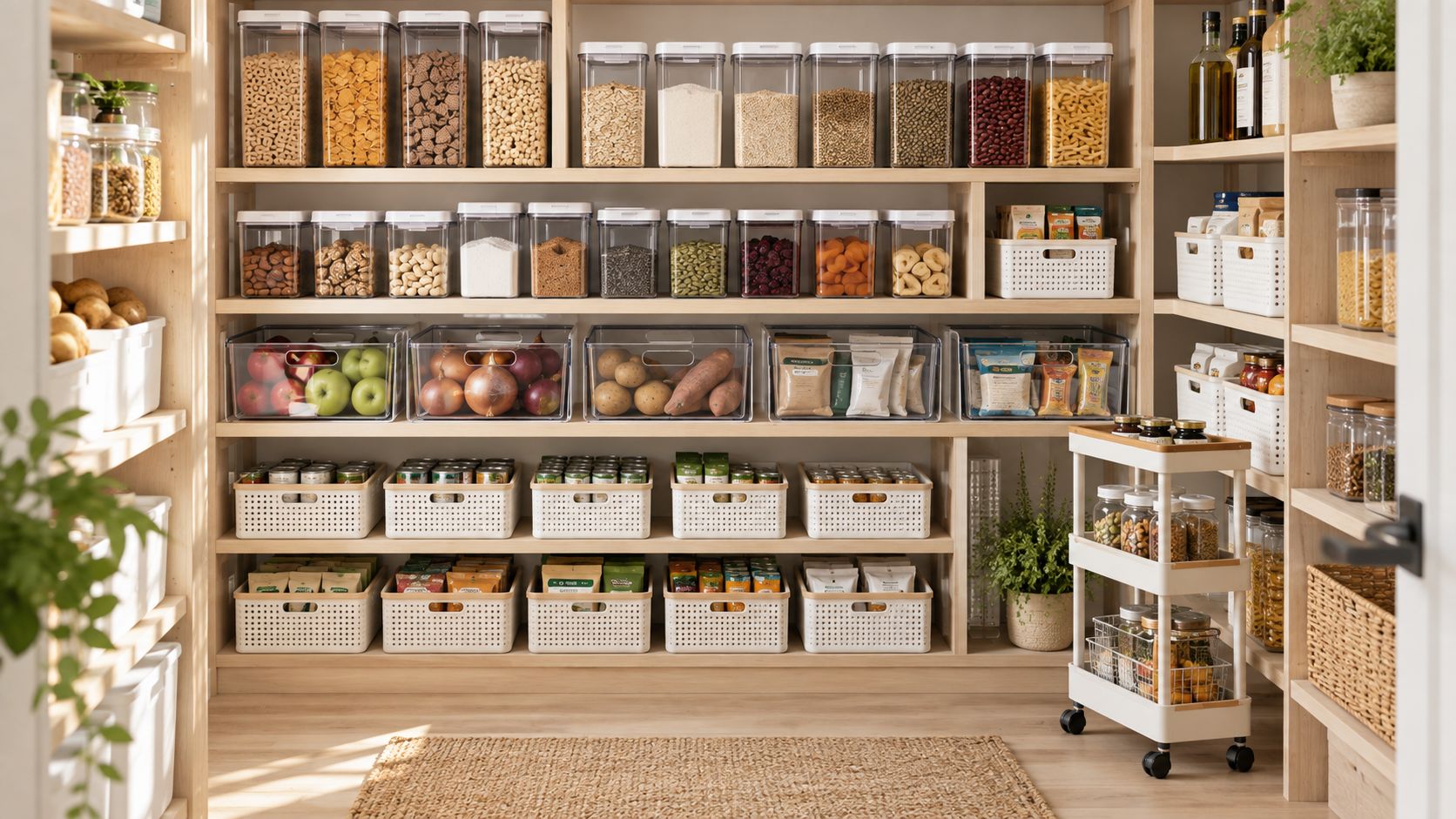
Introduction
Plastic storage bins look simple, but they are unusually sensitive to small decisions. A lid that is awkward to remove, a footprint that wastes shelf space, a wall that flexes too easily, or a carton that makes labels difficult to scan can change how a product performs in retail. For an importer or private-label buyer, those details affect more than a single SKU. They influence range logic, replenishment, returns, photography, consumer reviews and the confidence a buyer has in the next order.
That is why the best sourcing process begins before a supplier is asked for a price. A useful request explains where the bin will be used, what must fit inside it, what it must sit beside, how it will be packed and which characteristics must be checked before shipment. This guide gives procurement teams a repeatable way to build that request.
HAKORA develops home-organization product concepts for importers, retailers, distributors and private-label programs. The framework below is designed to make an early sourcing conversation more precise. It does not replace product testing or target-market compliance review; those steps should be agreed for the specific product and destination.
1. Begin with the category job, not the word “storage bin”
“Storage bin” can mean an open basket for a pantry shelf, a lidded box for a closet, a low drawer organizer, a stackable clear container, or a bin that sits inside a cabinet system. Each job creates different priorities.
Define the intended room and user action
Ask these questions before selecting a shape:
- Is the product intended for pantry shelves, a refrigerator, kitchen cabinets, drawers, closets, bathrooms, laundry rooms, offices or general household storage?
- Will the consumer lift it by a rim, carry it with side handles, slide it from a shelf, pull it from a drawer, or stack it?
- Is the product used daily, occasionally, or for seasonal storage?
- Does the shopper need to see the contents, or is a concealed finish preferred?
- Is the product sold as an individual item, a coordinated set, or part of a modular collection?
The answers shape the product brief. A pantry bin may benefit from easy front access and a visible contents area. A closet bin may need a lid, a more regular outer footprint and a clear labeling zone. A drawer organizer must begin with interior dimensions, because an attractive product that does not fit common drawer depth creates avoidable returns.
Build around a small number of shopper missions
Retail assortments are easier to understand when every SKU has a clear mission. Examples include “contain loose pantry packets,” “separate refrigerated produce,” “sort cosmetics in a shallow drawer,” or “store folded linens by season.” Instead of launching many near-identical sizes, aim for a progression of useful footprints and heights. This makes it simpler to merchandise the range and helps the consumer understand why each item exists.
When reviewing an initial sample, place it in the intended setting whenever possible. A tabletop view can hide access problems that become obvious on a deep shelf or inside a cabinet. Application review is especially useful for checking handle clearance, how the bin looks when partially filled, and whether its proportions work with surrounding products.
2. Translate the use case into specifications a supplier can quote
Vague requests invite vague quotations. A supplier can only compare feasibility when the buyer supplies enough detail to identify the product geometry, appearance and commercial context.
Dimensions and usable volume
Request external length, width and height, but do not stop there. Interior dimensions can matter more for organizers that need to hold packets, folded textiles, bottles, food containers or drawer accessories. If a lid, divider, handle or taper reduces usable space, ask for that to be shown in the drawing or sample review.
For stackable products, document both a single-unit height and the intended stacked arrangement. The buyer should decide whether stacking occurs with a lid, without a lid, with products nested when empty, or only under a specified load. Avoid stating a load rating in marketing material unless the finished product has been validated using a documented method that matches the intended configuration.
Access, handling and safety details
Small design choices influence repeated consumer use:
- Open-top access: Is the front edge low enough for the intended item to be reached without removing the bin?
- Handles: Are they comfortable for the target hand position, and do they interfere with adjacent SKUs?
- Lids: Is the opening action clear, and does the lid align reliably during ordinary use?
- Edges and corners: Are they consistent, smooth and appropriate for the product’s intended household context?
- Labels: Is there a flat or controlled surface for a retail label, barcode or consumer-facing organization label?
During sample review, record observations in plain language and photographs: “front opening is too high for packet access,” “handle catches neighboring bin,” or “label panel needs more contrast.” This is more useful than a generic instruction to “improve quality.” It also creates a traceable discussion for later sample revisions.
Appearance and finish
Clear, translucent, solid-color and textured finishes all create different consumer expectations. For a transparent product, visual consistency matters because users can see wall thickness variation, gates, flow lines or surface marks more easily. For a solid finish, color control and surface texture may be the dominant concerns. If the range is intended to coordinate across several materials or factories, provide a physical reference, approved color standard or clear digital color process rather than relying only on a verbal color name.
3. Choose material by use case and validation plan
The material conversation should be practical. Buyers sometimes ask for a material name without explaining whether transparency, rigidity, impact resistance, surface appearance, washability, food-contact suitability, temperature exposure or cost position is the real priority. That makes comparison difficult.
Common plastic options in home organization include PP, PET, ABS, HIPS, GPPS and PS. Their suitability depends on formulation, product geometry, processing method and the intended environment. A material label by itself does not prove a finished product is appropriate for every use.
For example, a buyer may prefer a clear visual effect for a fridge organizer, a more opaque coordinated finish for a cabinet basket, or a more substantial surface feel for a desktop organizer. The supplier should explain which material and manufacturing route is proposed, but the buyer should still request product-specific samples and any relevant declaration or test documentation for the intended market.
Questions to include in a material request
- What material is proposed for the body, lid, handle, insert and any non-plastic component?
- Is the requested visual effect transparent, translucent, matte, gloss or textured?
- What normal-use conditions should the product be designed around?
- Does the intended application trigger market-specific food-contact, chemical or labeling requirements?
- Which reference sample or specification will be used for color and appearance approval?
- What information can the supplier provide about the finished product, rather than only the raw material?
This approach is more reliable than copying broad material claims from a marketplace listing. It leaves room for the product engineer and buyer to agree the right solution for the actual SKU.
4. Ask for a practical sample and inspection plan
Samples are not simply photo props. They are the first opportunity to check whether a product behaves as the brief describes.
What to review during sample evaluation
Use the intended application rather than a generic desk check. For example, put pantry bins onto a shelf with representative packages, slide drawer organizers into a typical drawer, or stack the proposed storage boxes in the configuration expected by the end user. Record what happens when the product is filled, lifted, nested, stacked, opened and cleaned according to the care guidance.
Focus on observable points: dimensions, fit, lid alignment, handle usability, surface appearance, color, molding consistency, component assembly, odor concerns, label position and pack-out. If the product has a special feature, agree how it will be checked. A buyer should avoid saying that a product “passed testing” unless the test method, sample condition and acceptance rule are known.
Shipment inspection should reflect the approved sample
Before production is shipped, an inspection plan should refer back to the approved reference: what is the accepted sample, which dimensions are critical, what appearance defects are unacceptable, how many units will be checked, and what carton marks or count must be confirmed? Third-party inspection may also be appropriate for a new supplier, a new product, a high-value order or a program with strict retailer requirements.
The important point is consistency. A shipment inspection cannot usefully judge a product against an unwritten expectation. The product brief, approved sample, packaging artwork and inspection checklist should tell the same story.
5. Design packaging for the retail channel and the logistics path
Packaging is where category design meets operations. A well-designed bin can still arrive with problems if its carton does not protect it, if units scuff in transit, if a mixed set is hard to identify, or if the retail pack does not communicate what the shopper receives.
Retail pack questions
- Is the item sold loose, with a wrap, sleeve, color card, insert or closed box?
- Is the quantity per consumer set unmistakable?
- Where will the barcode, country-of-origin marking, care information and required warning text appear?
- Does the package show dimensions and the intended use without making unverified performance claims?
- Can a shopper see the finish, color and key feature before purchase?
Master-carton questions
- How many consumer units or sets are packed per carton?
- Are cartons designed around the product’s natural nesting or stack arrangement?
- What carton markings are required for the buyer’s warehouse and the destination market?
- Does the buyer need mixed-SKU cartons, pallet instructions, drop-test requirements or an inspection photo record?
Packaging decisions should be reviewed before final artwork is approved. A simple pack-out photo from the supplier can expose issues such as excessive void space, poor label visibility or mixed components that are difficult to identify at receiving.
CTA: Turn your product idea into a quote-ready brief
If you are developing a wholesale storage-bin range, send HAKORA your target room, approximate dimensions, preferred finish, expected SKU count and any reference photos. We can help organize those inputs into a product conversation for OEM or private-label development. [Send Your Requirements → /contact]
6. Compare suppliers on clarity, not only the first unit price
An initial price is useful, but it does not show whether two offers describe the same product. Compare each quotation against the same brief. If one supplier includes a lid, a particular finish, a retail pack or a stated inspection step and another does not, the apparent price difference may not be comparable.
A practical supplier comparison asks:
- Did the supplier restate the use case and requirements accurately?
- Are drawings, sample details and material descriptions clear enough to review?
- Does the quotation identify product, set quantity, packaging and assumptions?
- Can the supplier explain which points require confirmation before mass production?
- Is the proposed communication process suitable for sample approval, artwork review and shipment inspection?
For an early order, clarity often reduces risk more effectively than a small price advantage. The buyer needs an accountable record of what was approved and what will be delivered.
7. Common sourcing mistakes to avoid
Treating every room as the same use case
A deep lidded box may be suitable for seasonal closet storage but frustrating in a pantry. Do not use a generic product name as a substitute for application planning.
Approving a sample without its pack-out
Inspect the unit and the way it will be shipped. A retail pack and master carton can change the condition in which the buyer receives the product.
Copying material claims without checking the finished item
The material family does not replace finished-product validation. Ask for product-specific information that matches the intended market and use.
Letting dimensions live only in an email thread
Put key measurements and tolerance expectations into the approved specification or drawing. This makes later inspection more objective.
Asking for “better quality” without acceptance criteria
Describe the exact problem, reference the sample or photo, and state what an acceptable result looks like. Specific feedback is faster to act on and easier to verify.
FAQ
What should I send a plastic storage bins supplier before asking for a quote?
Send the intended use, reference images, approximate dimensions, target finish, number of SKUs, required packaging, destination market, expected order context and any mandatory documentation or inspection requirements. If you do not yet know every detail, identify the open questions instead of assuming the supplier will infer them.
Which plastic is best for storage bins?
There is no single best material for every storage bin. The appropriate choice depends on the intended room, desired appearance, product geometry, normal use, cleaning expectations, target-market requirements and the finished-product validation plan. Request a supplier recommendation together with samples and supporting product information.
How do I make a storage range look coordinated at retail?
Create a shared design language: compatible footprints, a purposeful size progression, consistent color or finish logic, aligned label areas and clear room-use messages. A coordinated range should not be a collection of unrelated containers with different visual rules.
What should a pre-shipment inspection cover?
It should cover the approved product reference, key dimensions, visible appearance, components, pack quantity, barcode or artwork placement, carton marks and any special feature agreed in the specification. The inspection scope should be agreed before the inspection occurs.
Conclusion
Wholesale plastic storage bins become stronger products when the buyer’s brief connects consumer use, physical design, materials, packaging and inspection. The most effective sourcing conversations are not the longest; they are the ones where the supplier can see what problem the SKU solves and how the finished product will be assessed.
For a new retail range, begin with a small, coherent set of room-based use cases and approve the details that affect repeat use. Then use samples and shipment inspection to check the product against that plan. This gives your team a more reliable foundation for quotation, development and repeat purchasing.
Ready to discuss a storage-bin assortment? [Ask for a Product Catalog or Send Your Requirements → /contact]