
SEASONAL BUYER GUIDE 8 min read
Holiday Fridge Organization: A Retail Buyer’s Guide to Bins, Containers and Leftover Zones
Plan a holiday fridge organization range with clear bins, covered containers and leftover zones. A practical assortment and sample checklist for retailers.
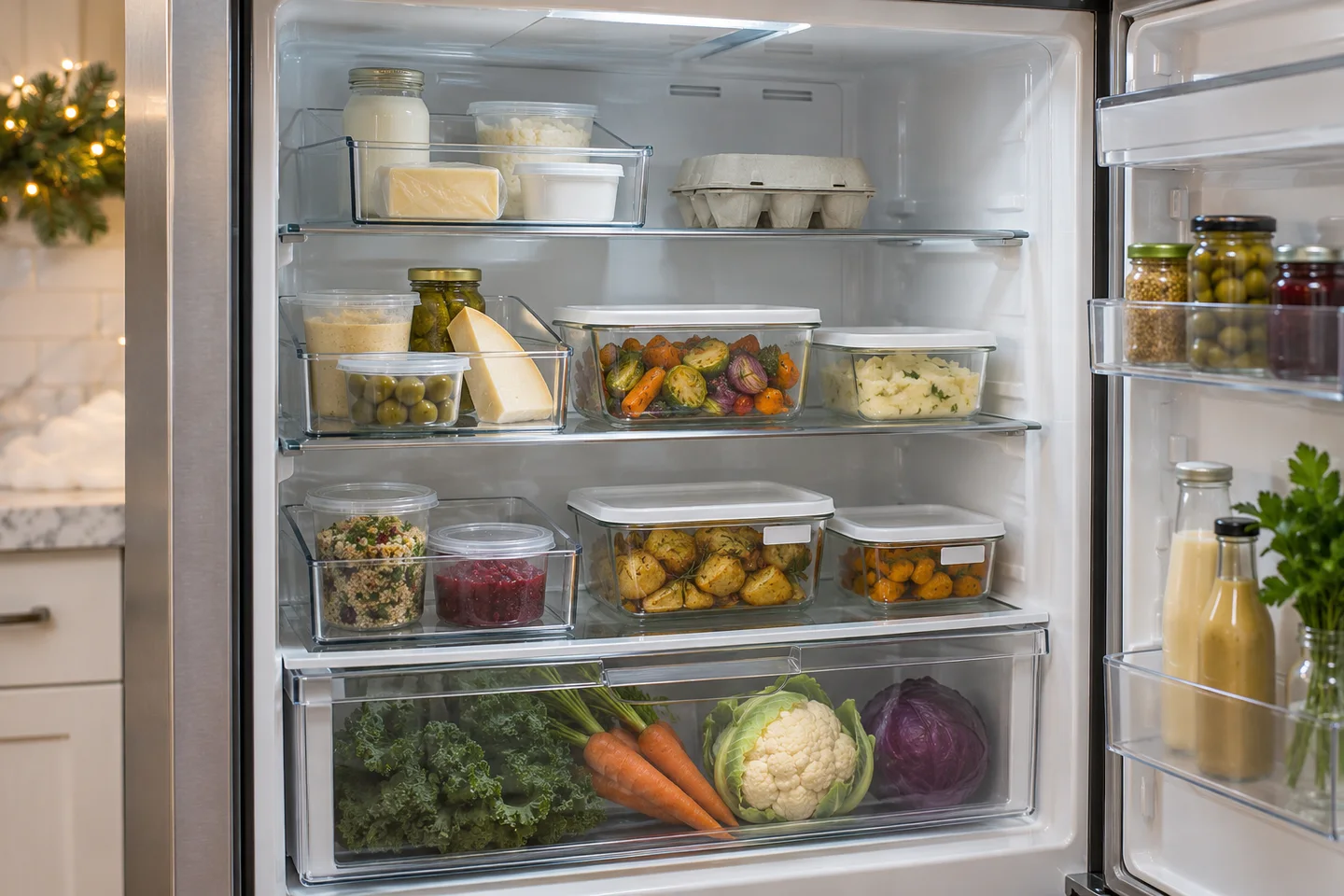
AI-generated editorial illustration. The containers shown are generic concepts, not exact HAKORA products or evidence of food-storage performance.
Holiday fridge organization works best when every product has a clear job: group packaged ingredients, keep prepared dishes covered or make food that needs using easy to spot. For retailers, the opportunity is to build a small, understandable assortment around those routines—and show shoppers how to use it before the festive food shop arrives.
A large set of matching boxes can look attractive online while leaving little room for an awkward platter or tall bottle. A useful range combines suitable footprints, easy access and clear instructions, with room left for the foods that do not fit a standard container.
Why festive fridge organization is a timely retail topic
WRAP’s November 2026 report, The festive food opportunity, identifies storage pressure as a seasonal challenge. In its January 2026 research reflecting on Christmas 2025, 12% of respondents said they were worse than normal at keeping their fridge or freezer organized. The report also suggests making space before the festive shop and creating a shelf for food that needs using.
These are self-reported UK findings, rather than global sales data or evidence that a particular container reduces waste. For a retail range, they offer a useful editorial angle: help shoppers plan what goes where before choosing how many boxes to buy.
That supports a seasonal story with an everyday application. The same products can later organize weekly ingredients, lunch items and covered leftovers, provided their intended uses have been confirmed.
Give organizer bins and food containers different jobs
A fridge organizer bin groups items. A food container holds food directly when it is designed and documented for that use. Packaging and product photography should make that difference obvious.
Use a bin to bring together small cartons, sealed packets or individually covered containers. Select a suitable food-contact container for an unwrapped prepared dish. A clear body alone does not establish food-contact suitability, and a fitted lid does not establish an airtight or leakproof seal.
| Product format | Potential holiday role | Sample checks before listing |
|---|---|---|
| Open organizer bin | Group packaged ingredients or small covered items | Interior fit, grip access and room to pull it forward |
| Shallow covered container | Separate smaller portions of prepared food | Intended food use, lid fit, usable depth and care instructions |
| Taller covered format | Hold a bulkier item or a defined storage group | Shelf height, access clearance and visibility |
| Coordinated size set | Offer complementary footprints in one pack | Distinct roles, complete contents and manageable pack size |
For a broader comparison of materials, packaging and supplier questions, use our fridge storage containers sourcing guide. This holiday guide focuses on the seasonal assortment and merchandising story.
Plan three routines: before, during and after the holiday meal
Before the big shop: create a use-first area
Start by checking what is already in the refrigerator. A visible area for suitable foods approaching their use-by dates can help households decide what to use before buying more. Keep original date and storage information available when grouping packets in a bin.
Show a realistic amount of food in retail imagery. Leave space for irregular packs and preserve the refrigerator manufacturer’s required ventilation clearances. Filling every gap with plastic boxes is a poor demonstration of everyday access.
During preparation: separate ingredients from ready-to-eat food
Group ingredients by their storage requirements, then by meal or use. A bin can keep several packaged ingredients together, but it should not mix foods that need separating for hygiene.
The UK Food Standards Agency advises storing raw meat, poultry and fish in suitable packaging or sealed containers on the bottom shelf, where they cannot drip onto other food. Follow its official chilling and fridge-stocking guidance when planning demonstration images and consumer instructions. Keep raw foods separate from prepared, ready-to-eat items.
After the meal: make covered leftovers easy to identify
Reserve an accessible area for suitable covered leftover containers. A front-facing label can record the contents and preparation date without requiring every box to be opened. The label supports identification; it does not change food storage limits or replace package instructions.
Choose portions around likely next meals and the container’s intended use. Do not imply that any fridge container can also go in the freezer, microwave or dishwasher. Confirm those applications for the exact finished product before putting them on a listing or pack.
Choose sizes around usable shelf space
For holiday storage, access matters as much as capacity. A box that fits between two shelves may still be difficult to open, lift or return once the surrounding space is occupied.
Ask buyers or sample reviewers to record:
- Usable shelf width and depth, including rear clearance requirements.
- Available height and the space needed to lift or remove a lid.
- The footprint including handles, rims and protruding components.
- Clearance from the refrigerator door, drawers and neighboring containers.
- Visibility of the contents and any date label when the shelf is in use.
Test with representative packages rather than relying on liters alone. For a stackable proposal, check the actual samples together, including stability and access to the lower container. Do not promise stacking simply because two products have similar dimensions.
Build a focused assortment with distinct roles
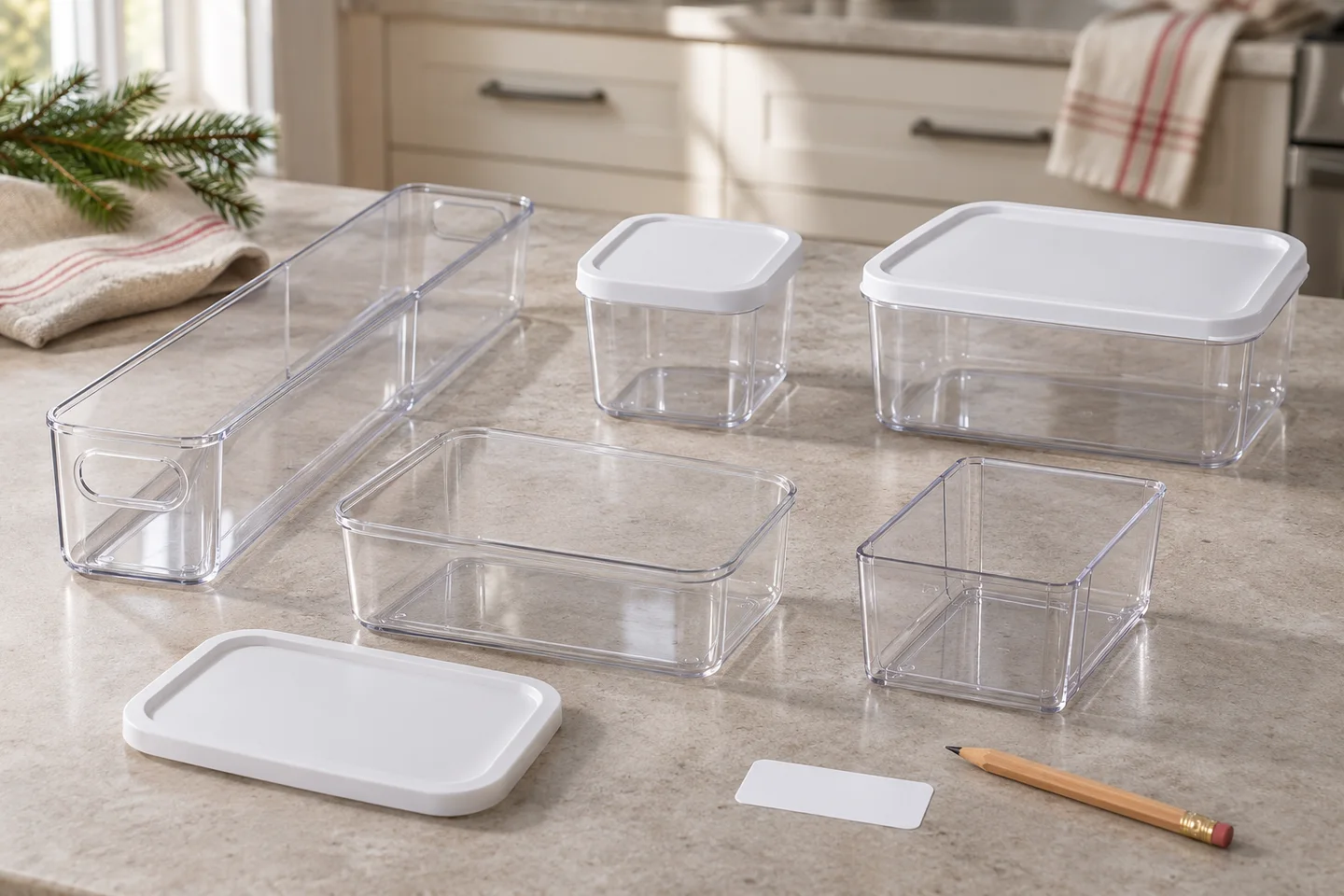
Begin with a compact covered format, a shallow rectangular option and a larger format only where it solves a separate task. Add an organizer bin if the range needs a way to group packaged items. This is a starting assortment proposal, not a fixed SKU count or recommended order quantity.
HAKORA’s fridge and food storage category provides several catalog references for size comparisons:
| Catalog reference | Listed dimensions | Question to resolve in sample review |
|---|---|---|
| 5363 small covered format | 14.5 × 14.5 × 7 cm | Does the footprint suit the intended portion or packaged item? |
| 5362 medium covered format | 20.5 × 14 × 5 cm | Does its lower profile work within the target shelf spacing? |
| 1025 small fresh-storage format | 14.3 × 14.3 × 11.9 cm | Is sufficient height available for the body and lid access? |
| 1026 large fresh-storage format | 31.7 × 16.4 × 14.7 cm | Can it be removed comfortably from the intended shelf? |
These dimensions are catalog references checked on 16 November 2026. Confirm the finished specification, usable interior, intended food contact and care requirements before selection. The generic illustrations in this article do not depict these exact SKUs.
Merchandise the routine, then confirm the sourcing details
Organize seasonal landing pages and retail displays around three tasks: prepare space, group ingredients and identify leftovers. Show one realistic application for each product, with external dimensions readable on the pack or listing.
Use permanent, practical product formats with a seasonal sleeve or insert where the packaging plan supports it. That lets the merchandising story change after the holidays without requiring Christmas graphics on the product itself.
Before approving a wholesale fridge organizer program, confirm:
- The SKU, components and sample revision being quoted.
- Target-market documentation for the intended use.
- Product-specific cleaning and temperature instructions.
- Set contents, labeling space and retail packaging artwork.
- Protection for clear surfaces during transport and the agreed carton pack-out.
- Sample, artwork, production and shipping dates against the required in-store date.
Discuss OEM and ODM requirements early. Current-season availability and customized production have different timelines; confirm the proposed route before planning a holiday launch.
Frequently asked questions
How do you organize a fridge for holiday leftovers?
Make space before the meal, reserve an accessible area for suitable covered containers and label their contents and preparation dates. Keep raw foods separate, follow food storage instructions and maintain the refrigerator’s required clearances. Containers support organization; they do not extend safe storage times by themselves.
What is the difference between a fridge bin and a leftover container?
A bin typically groups packages or other containers. A leftover container directly holds prepared food when approved for that use. Confirm the product’s intended food contact, lid function and care instructions instead of treating all clear boxes as interchangeable.
Are covered fridge containers automatically airtight or leakproof?
No. A lid, or a catalog name using the word “sealed,” is not proof of tested sealing performance. Request evidence for the exact product and intended conditions before making either claim.
What should a retailer send a fridge organizer supplier?
Send the target market, shopper tasks, shelf measurements, preferred formats, expected quantity and packaging direction. Include the required delivery window and any documentation needs. Those details make sample selection and quotations more useful.
Plan your holiday fridge-storage range
A useful seasonal range helps shoppers see what they have, reach what they need and give prepared food an appropriate covered home. Start with distinct product roles, check fit in a realistic refrigerator setting and keep consumer instructions specific to the selected item.
Planning a retail or private-label collection? Send HAKORA your fridge-storage brief, including your target market, shelf dimensions, preferred formats, packaging plan and required delivery window.